
How long to season firewood
Hardwood takes between 6 months and 2 years to season. See what 20% moisture means, how to dry your own logs and how to tell when they are ready to burn.
Hardwood takes between 6 months and 2 years to season, depending on the species. Dry wood should have 20% moisture or less.
What seasoning means
Seasoning firewood is waiting for your wood to lose moisture. Freshly felled trees and the logs you split from them have a high moisture content, often up to 50%. You should only burn firewood that has a moisture content of 20% or less.
There is no set standard or method for seasoned firewood. The term can be applied to any wood that is stored for a period of time to naturally reduce the moisture content between processing and burning.
Wet wood contains moisture which creates smoke and harmful particulates when burned. This can damage your stove and chimney. It also means you are losing out on heat for your home. A fresh green log of about average moisture content has only around half the energy content of an equivalent, well seasoned log.
How long it takes
Ash, closely followed by birch, can often achieve an acceptable moisture content for burning in 1 year of seasoning, though more drying time is no bad thing. Oak, beech and sycamore are denser hardwoods that can take up to 2 years to season fully. Different logs need different amounts of time to get fully seasoned and ready for burning. Wood felled in the summer contains more sap, so it takes longer to dry. Standing timber will be driest in winter. Splitting logs increases their surface area and reduces their thickness, speeding up the drying process significantly.
How to season logs yourself
The three key things your wood will need to season are time, air, and sunlight. Late spring is generally the best time of the year to season your wood. The second best time is as soon as you can. Leaving freshly felled logs out on the ground increases the chance of mould growing, the wood rotting, and insects causing irreparable damage.
The next step is to split your logs, usually into pieces small enough to go into your stove straight after they have dried. Cross cut logs should be split to less than 10cm diameter if possible, which allows moisture to move from the centre of the log to the surface more easily.
Stack the logs on bearers, off the ground, in a sunny, windy location, under a waterproof cover with open sides. The stack should be well aired, and ideally the prevailing wind should blow through it. Do not wedge the logs too tightly together, because air circulation is the primary way your logs will lose their moisture. Do not create multiple layers of logs, because logs behind other logs reduce the airflow and lengthen the drying time.
In especially heavy rain or snow, it may be good to cover your store with some tarpaulin to stop the logs getting too wet. A bit of surface moisture will not make a difference to the drying process, but long periods of heavy rain can cause issues and delays. To achieve low moisture content for burning, bringing cut, split logs indoors for a few days or more before use will help.
How to tell when it is ready
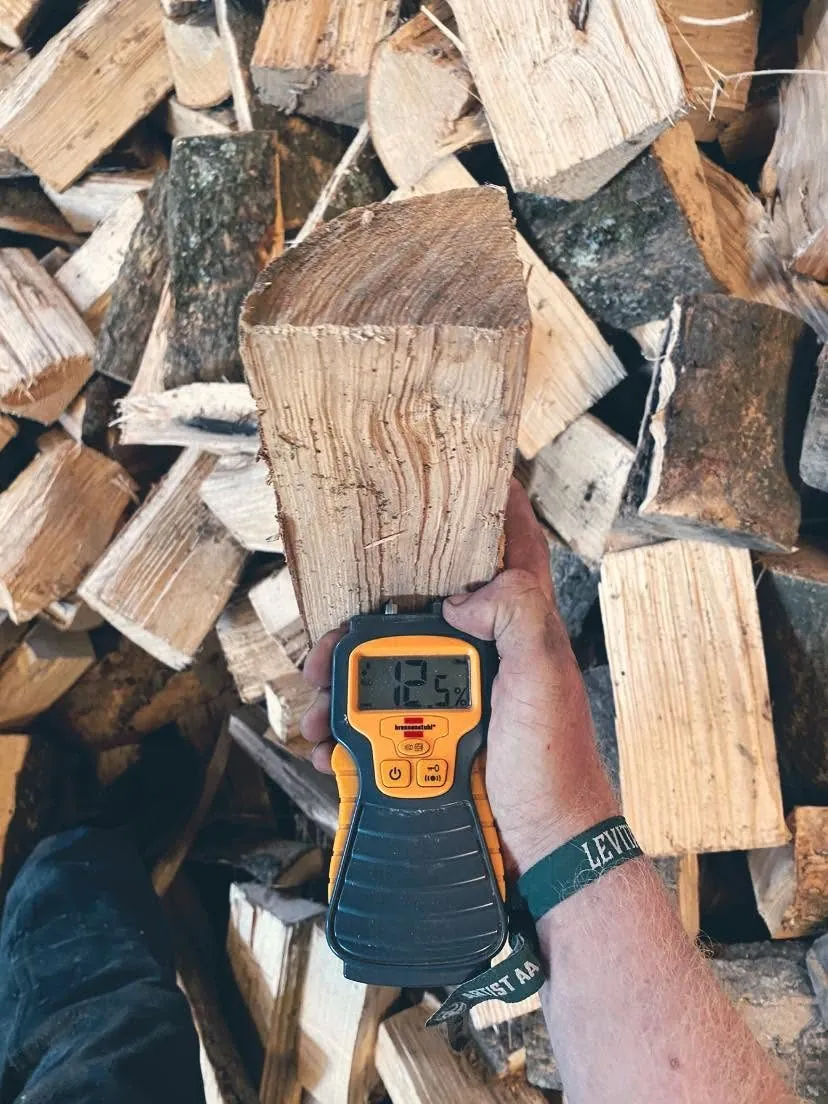
Use a moisture meter to check that moisture levels are 20% or less before burning. Moisture meters are cheap and easy to use. Check that the moisture is up to and including 20% in a random number of samples of split logs before you burn them. Periodically checking in on your log store and measuring the moisture content of multiple logs will let you check the progress and see how the seasoning process is going.
If you do not have a moisture meter, you can often get an indication of whether logs are newly felled, partly seasoned or ready to burn from these signs.
- When you compare logs of similar size and the same species, wet wood is heavier.
- A hollow sound when you tap a log indicates dry logs.
- Cracked ends can indicate dry wood logs.
- The looser the bark, the drier the log.
- Dry wood can be light in colour.
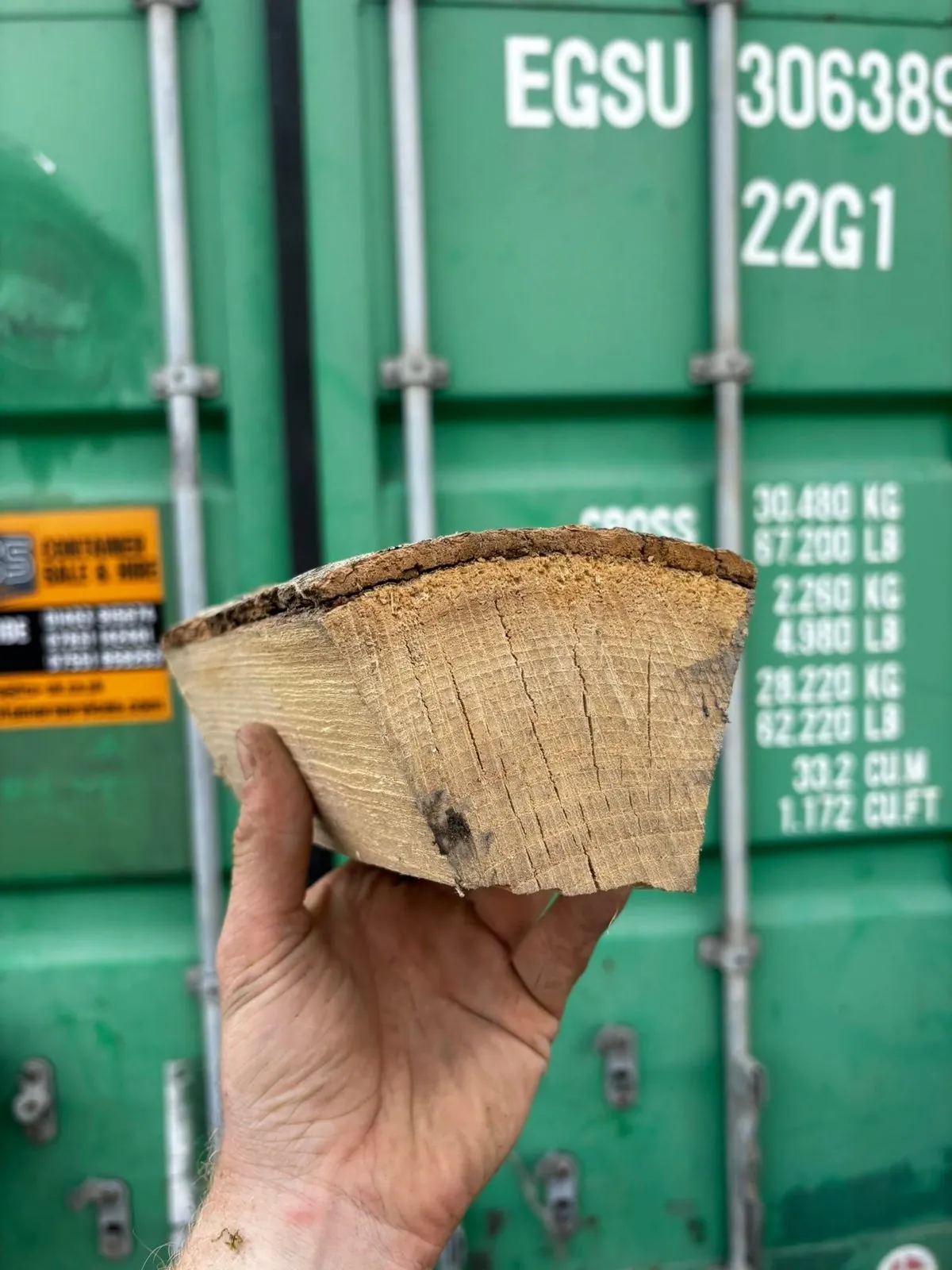
- Radial cracks and bark that comes off easily are signs of well seasoned wood.
How we dry our logs
If you'd rather not wait a year or more for your own logs to dry, ours are already dried and tested, so they're ready to burn when they arrive. Seasoned Logs are our main stock, air dried under cover at our own yard and kept under 20% moisture before they go out on the truck. Everything we sell is cut, split and dried at our own yard in Wisborough Green, and our seasoned hardwood logs are British, predominantly ash, with some beech and oak too. Ash, which we primarily stock, has a lower moisture content than other deciduous hardwoods.
All of our timber comes from locally managed woodland, and most of it is felled between autumn and spring, when the sap is down. Air dried logs sit under cover at the yard, stacked so the air moves freely through them and the rain stays off. We check our stock all year round to keep the moisture left in the wood under 20%, and every batch is tested before it's bagged and sent out for delivery.
Kiln Dried Logs are dried to order, so just mention it when you place your order.
WhatsApp us on 07734 374774, or use the contact form, and you'll get an answer straight away, whatever the hour.
We deliver every day, from our own truck out of our own yard, no couriers, no pallet wrap, and most weeks that's the same week you order, with your delivery day confirmed when you book. Delivery is free inside our local area, on any size order.
Once your order is confirmed, you can pay online from the link we send, on the day, or by invoice, whichever suits you best.